WalkMe built the digital adoption category, but a lot has changed.
SAP completed its $1.5 billion acquisition of WalkMe in 2025, and the platform is now being folded into SAP’s Business Transformation Management stack, integrated with SuccessFactors, Ariba, Concur, and positioned as a feeder into SAP’s Joule copilot.
For teams outside the SAP ecosystem, or teams that just want in-app guidance without a multi-month implementation, that shift is a good reason to look around.
Here’s an honest rundown of five tools people evaluate as WalkMe alternatives in 2026, what each one is actually built for, and what they cost.
1/ Tango
Tango is an app that turns any process into a polished, step-by-step guide the moment you walk through it once, without dev team, backend integration, or multi-week rollout. You capture, edit, and publish, and the guide is live wherever your team needs it.
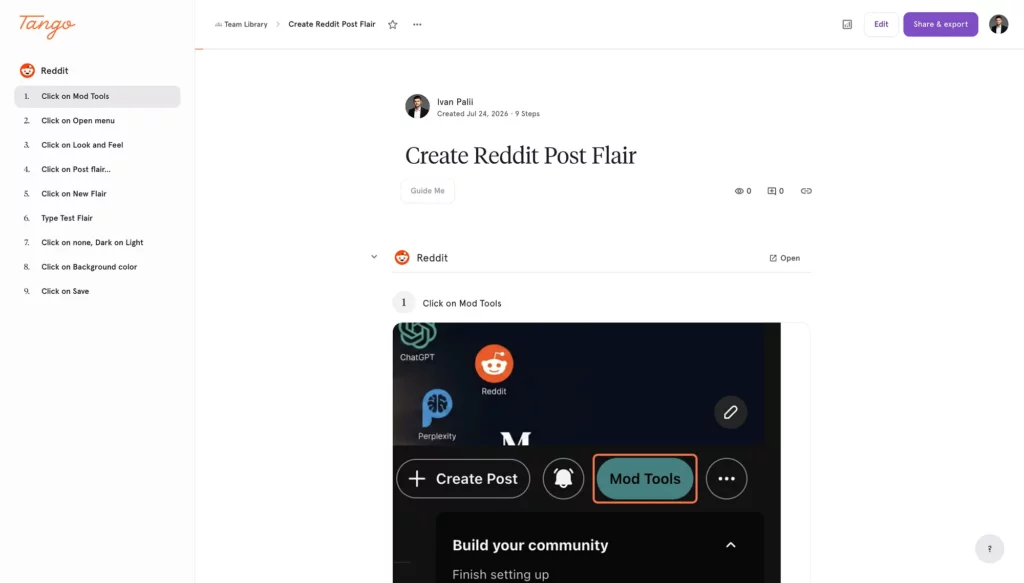
Where Tango differs from WalkMe is implementation weight. WalkMe is a highly configurable platform, but that configurability comes with a cost: you typically need a WalkMe developer to build and maintain it, and it’s usually licensed per system.
Tango works the opposite way. It’s horizontal: one Tango account works across your CRM, your HR system, your ERP, and anything else your team touches in a browser, without per-system setup.
What that looks like in practice:
- Capture in minutes, not weeks. Hit start, walk through the process, and Tango auto-generates a guide with screenshots, step descriptions, and optional AI voice narration.
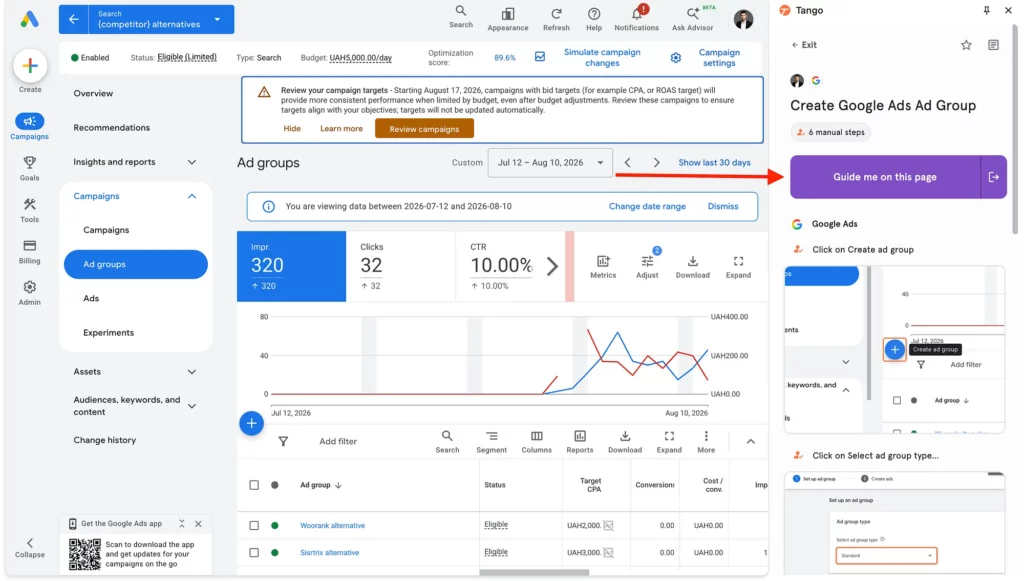
- Guide Me. Turns any captured guide into an interactive, on-screen walkthrough that highlights exactly where to click, live inside the application.
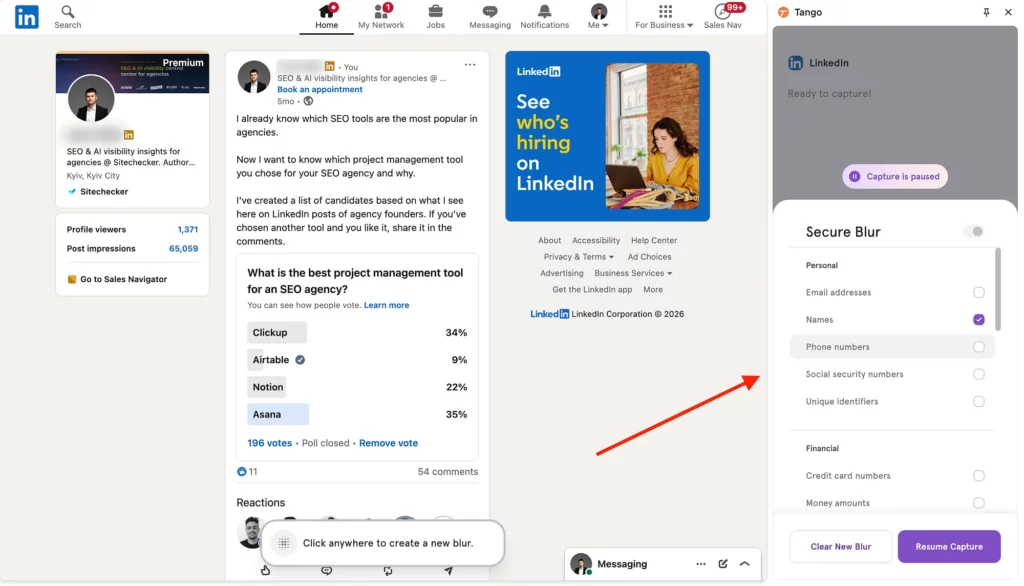
- Live Blur. Automatically redacts sensitive data at the point of capture, which matters for anyone documenting processes in systems that show PII, payment details, or health data.
- Branching. Handles processes with real forks and detours, not just linear click-throughs (useful for support and operations workflows that vary by case type).
- No dev dependency. Anyone on the team can create, edit, and publish. There’s no admin layer required to stand it up.
- Works everywhere. Any Chromium-based browser, any web app: Salesforce, SAP, NetSuite, Workday, Epic Cloud, Zendesk, Oracle, ServiceNow, Microsoft Dynamics, internal tools, all of it.
The tradeoff: Tango is not as deeply configurable as WalkMe for things like in-app pop-up sequencing or complex triggered workflows. If you need that level of control and have the team to maintain it, WalkMe (or Whatfix) is still the more powerful tool.
But for internal training, SOP creation, and onboarding, the actual daily pain point for most IT and Ops teams, Tango gets you live the same week, not the same quarter. Also read the full comparison Tango vs Walkme.
Pricing: Free plan available. Pro starts at $22/mo. Enterprise is custom-quoted.
Tango’s G2 rating: 4.7/5 from 515 reviews.
2/ Whatfix
Whatfix is the closest like-for-like alternative to WalkMe, a full enterprise digital adoption platform with a no-code flow builder, in-app guidance, and product analytics.
It’s independent (not acquired), serves 700+ enterprise customers, and is generally seen as more usable than WalkMe with a shorter time-to-value.
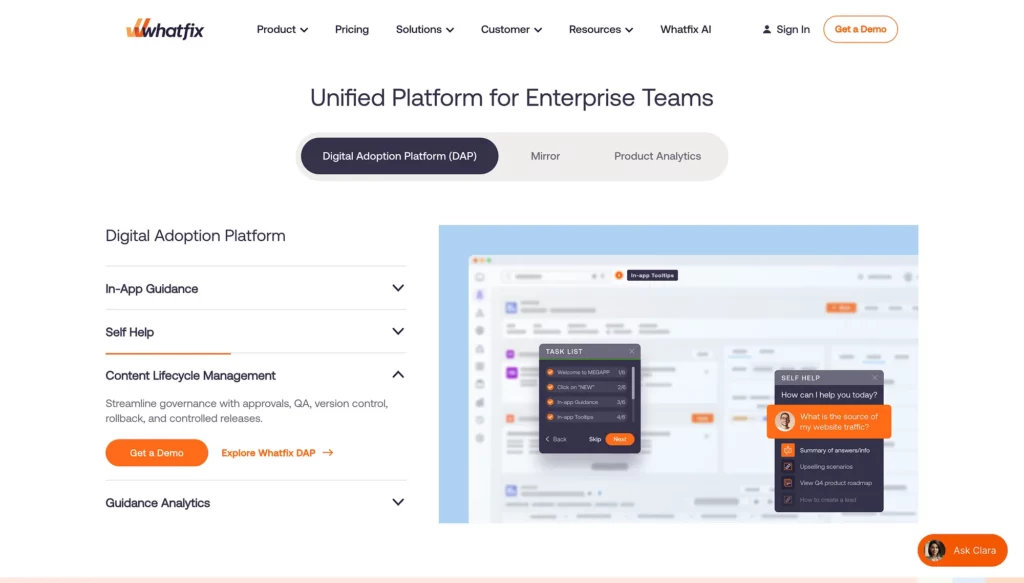
That said, it’s still an enterprise DAP in the traditional sense: heavier setup than a browser-extension tool, quote-only pricing, and typical annual contracts reported in the $24,000–$37,000+ range.
If what pulled you toward WalkMe in the first place was its depth and configurability rather than its price or complexity, Whatfix is the most direct substitute.
Pricing: No published tiers; contact sales. Reported typical annual contracts start around $24K.
Whatfix’s G2 rating: 4.6/5 from roughly 515 reviews.
3/ Pendo
Pendo leads with product analytics and layers in-app guides on top. It’s a strong fit if your priority is understanding user behavior (feature adoption, drop-off points, NPS) and using that data to drive guidance, rather than starting from guidance and adding analytics later.
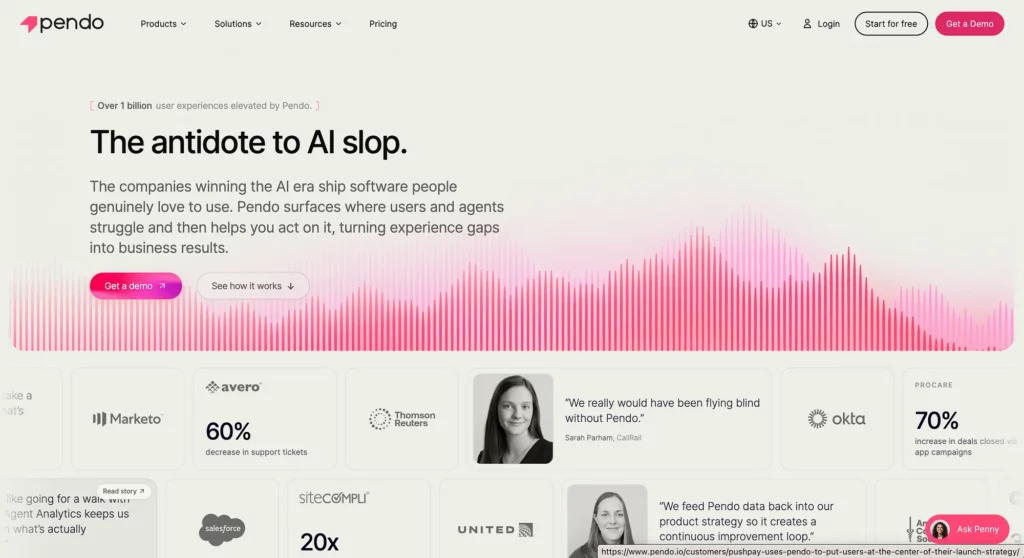
Pricing is usage-based (tied to monthly active users), fully custom-quoted, and reviewers consistently flag it as expensive and opaque as usage scales. Third-party estimates put real-world costs anywhere from $15K to well over $150K annually depending on MAU and tier.
Pricing: Free tier exists; paid plans (Base/Core/Ultimate) custom-quoted, no published rates.
Pendo’s G2 rating: 4.4/5 from roughly 1,808 reviews.
4/ Lemon Learning
Lemon Learning is a European DAP built around a “learning by doing” approach: in-app walkthroughs, tooltips, and step-by-step guidance with strong multi-language support (35+ languages).
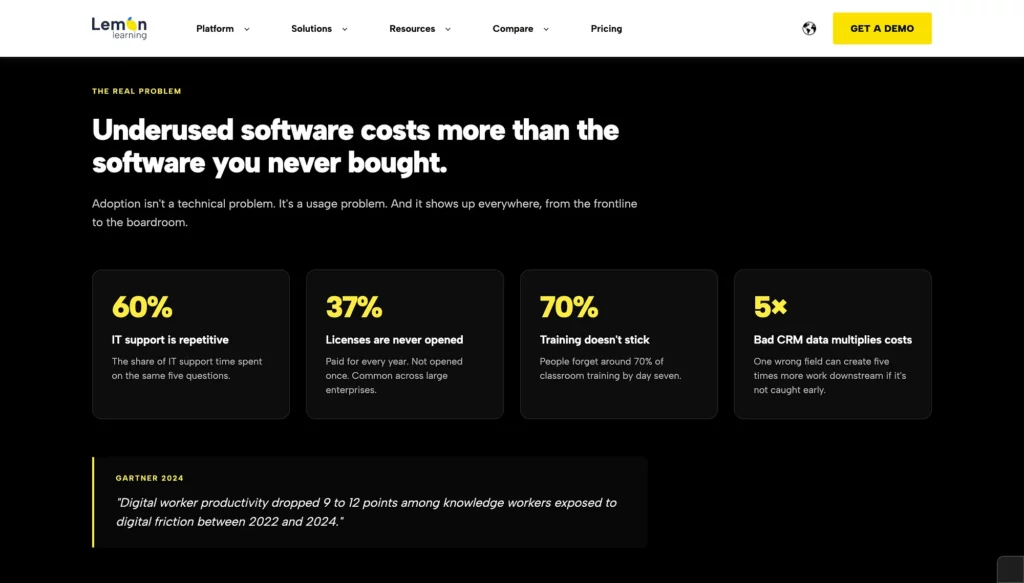
It’s positioned as a more transparent, better-supported alternative to WalkMe, particularly for European buyers who value local support over deep US-style feature sprawl.
Worth noting: it has a much smaller review base than the others on this list, so treat the rating as a smaller, less statistically settled sample.
Pricing: No published pricing; fully custom quotes based on users and features.
G2 rating of Lemon Learning: 4.8/5, but from a small sample (under 50 reviews).
5/ Chameleon
Chameleon is a product-led onboarding and in-app engagement tool (tours, tooltips, banners, checklists, microsurveys) aimed more at customer-facing SaaS onboarding than internal employee training.
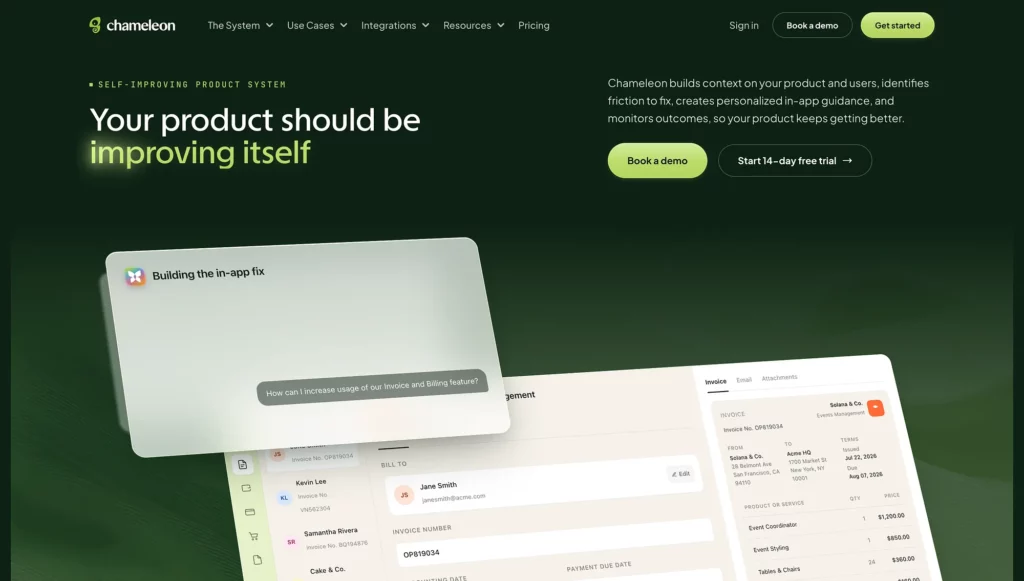
It’s worth including for teams evaluating WalkMe for product-side use cases (activating trial users, driving feature adoption) rather than internal SOPs and training, where it’s a closer functional match than the other tools here.
Pricing: No permanent free tier (14-day free trial). Startup plan from $279/month; Growth and Enterprise are custom-quoted.
Chameleion’s G2 rating: 4.4/5 from roughly 361 reviews.
Which one actually replaces WalkMe?
It depends on what you were using WalkMe for.
- If it’s deep, multi-step in-app guidance across a complex enterprise stack, Whatfix is the nearest match.
- If it’s product analytics driving onboarding decisions, Pendo.
- If your team is customer-facing and product-led, Chameleon.
- And if what you actually needed all along was a fast way to document how your team does things and get that guidance in front of people without a dev team or a six-figure contract, that’s Tango.
P.S. Also read